
An informational look at traditional Indonesian spices and ingredients: their composition, how they are used in everyday cooking, and why they are interesting beyond their flavor. No health claims are made on this page.
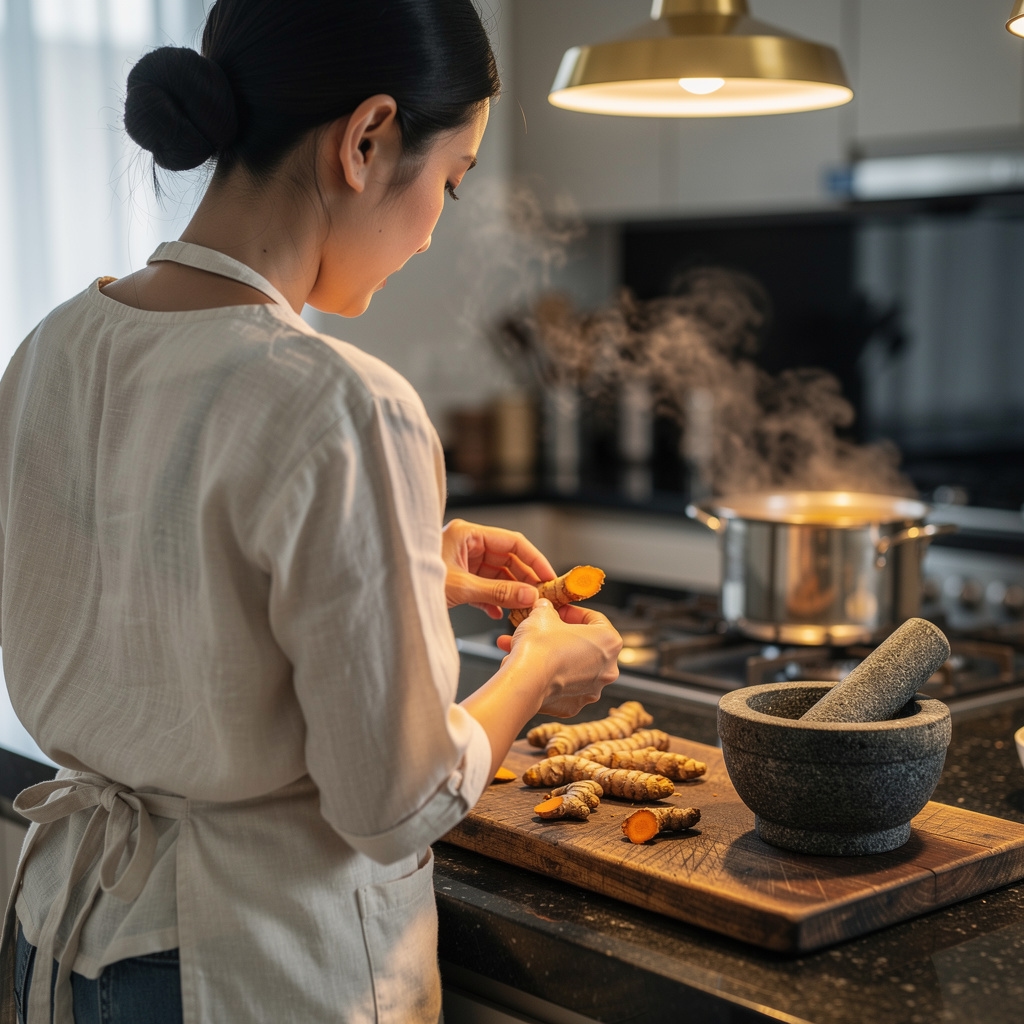
Kunyit (Curcuma longa)
Turmeric is one of the most widely used ingredients in Indonesian cooking. The fresh rhizome appears in rendang paste, soto broth, opor ayam, and countless rice dishes. Dried and powdered, it colors nasi kuning yellow for ceremonial occasions. It is so embedded in the culinary culture that most households keep fresh kunyit in the same way others keep onions.
From a compositional standpoint, turmeric contains curcuminoids, of which curcumin is the most studied compound. It also contains volatile oils, including turmerone and zingiberene, which contribute significantly to its flavor profile. The composition changes depending on whether the rhizome is fresh, dried, or cooked, and the preparation method affects what compounds remain in the final dish.
In Indonesian cooking, turmeric is almost always cooked in oil or coconut milk, rarely consumed raw. This is worth noting because certain compounds behave differently in different preparation contexts. None of this is medical information. It is compositional context for a very common cooking ingredient.
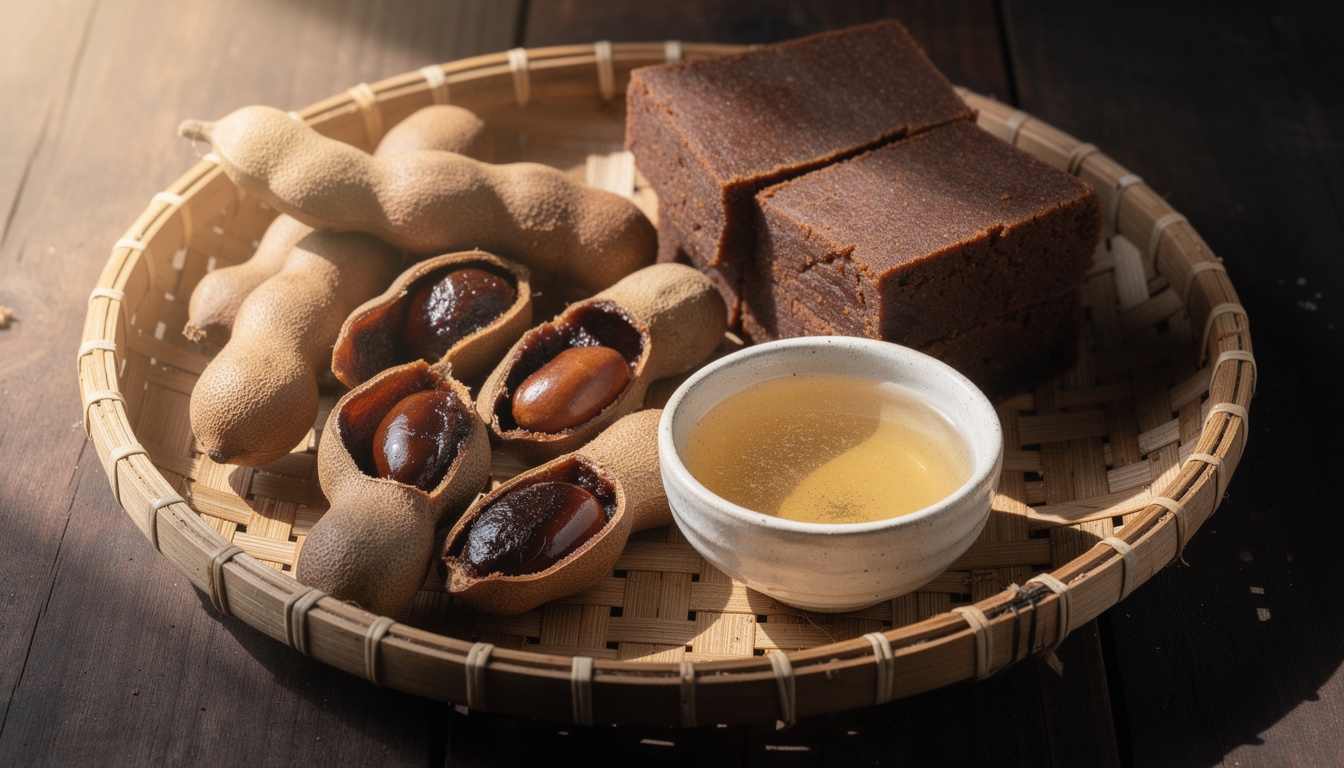
Asam Jawa (Tamarindus indica)
Tamarind is the sourcing backbone of Indonesian cooking. It appears in sayur asam (the vegetable tamarind soup found across Java and Sulawesi), in pindang fish preparations, in sambal asam, and in numerous regional dishes that require a particular quality of acidity that citrus cannot replicate.
The sourness in tamarind comes primarily from tartaric acid, which is relatively rare in the plant world and gives tamarind its distinctive flavor profile compared to citric acid fruits. Tamarind pulp also contains sugars, dietary fiber, and various organic compounds. The dried paste used in cooking is concentrated, so the flavor impact is significant relative to the quantity used.
Regionally, Asam Jawa paste varies in consistency and sweetness. The version used in Central Javanese cooking tends to be sweeter than that found in Sulawesi or Sumatra. This affects how it interacts with other flavors in a dish, particularly in the balance between sweet, sour, and savory that characterizes much of Indonesian cuisine.
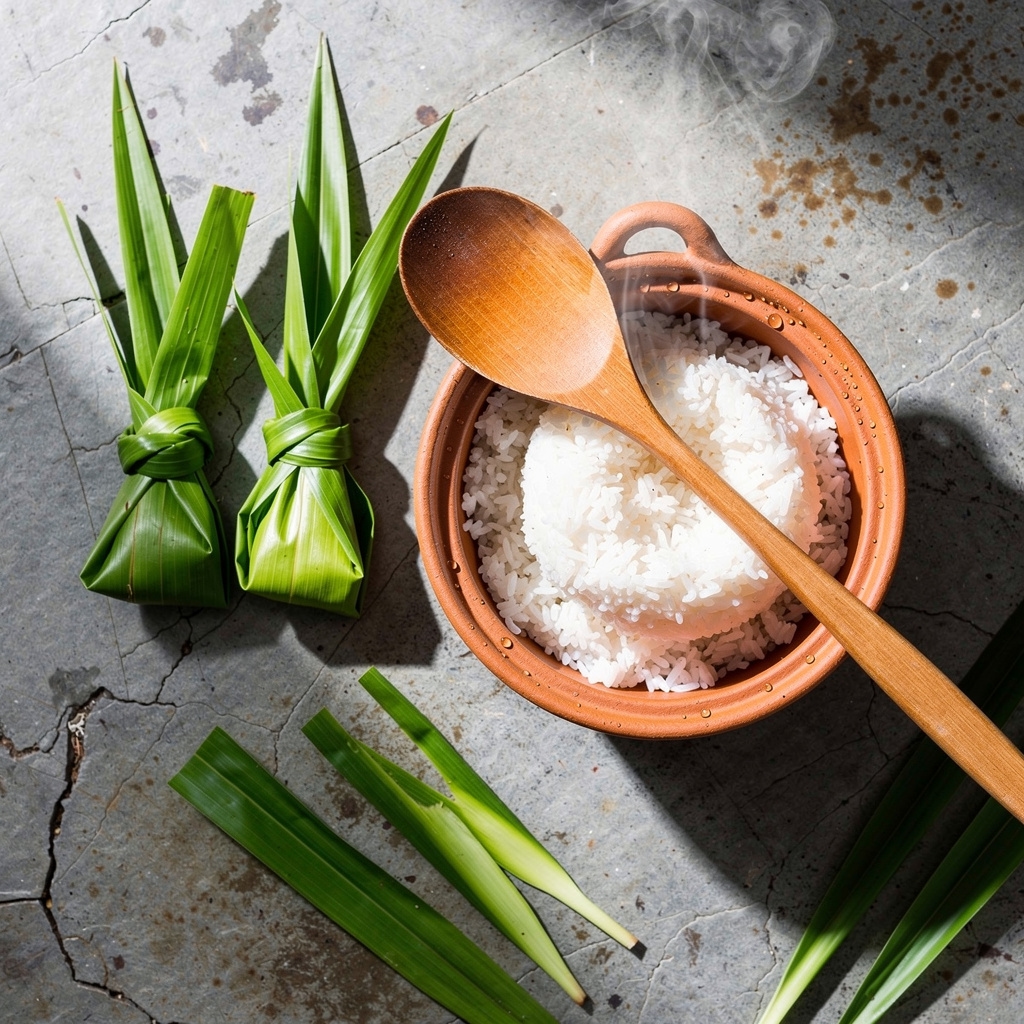
Daun Pandan (Pandanus amaryllifolius)
Pandan is the aromatic leaf that appears in Indonesian rice cooking, in sweets, in chiffon cakes, and knotted into broths. The smell is immediately recognizable. In South and Southeast Asia, it occupies a flavor role comparable to vanilla in Western baking, though the aroma is entirely different.
The compound primarily responsible for pandan's distinctive fragrance is 2-acetyl-1-pyrroline (2AP), the same compound that gives fragrant rice varieties like Thai jasmine rice their aroma. This makes pandan compositionally interesting because it explains why the leaf pairs so naturally with rice and why adding it to a pot of plain rice transforms the eating experience.
Pandan leaves are used in two main ways: the whole leaf knotted and cooked with food to release aroma, or pressed to extract juice for coloring and flavoring. The green color in pandan-flavored foods comes from chlorophyll, not from the aromatic compound. The two properties are separate, which is why pandan extract and pandan flavoring behave differently in recipes.
The conventional Indonesian eating day includes a proper breakfast (sarapan) typically between 6 and 8am, a main midday meal (makan siang) between 12 and 1pm, and a lighter dinner (makan malam) in the evening. Small snacks (jajan) fit between meals without replacing them.
Intermittent fasting frameworks, particularly 16:8 protocols, often involve skipping breakfast. In a culture where early morning eating is social and structural, this creates practical friction. Warung owners open at 6am partly because customers need to eat before work. The pattern is embedded in daily logistics.
What makes this comparison interesting is not whether one approach is better than another, but how the framing of any eating pattern interacts with existing cultural structure. Indonesian eating has always included periods of fasting, particularly during Ramadan, which is practiced by a large proportion of the population. The Ramadan fast is a different kind of intermittent eating: it is communal, it has specific start and end rituals, and it is embedded in social life in ways that individual dietary protocols are not.
The three-meal-plus-snacks structure also functions as a social connector in ways that scheduled eating windows do not account for. Makan siang is often a shared activity. Colleagues eat together. Family members synchronize around meal times. Changing when you eat changes who you eat with, and that has cultural weight that nutritional frameworks rarely address.
None of this is a recommendation. It is context for thinking about how any eating pattern fits or does not fit into a particular life.